

Yes — the Uffizi Gallery is absolutely worth it. It houses one of the greatest collections of Renaissance painting in the world, and if you care about art at all, it belongs near the top of your Florence itinerary. The only caveat: go prepared, or the sheer scale of the place can leave you exhausted rather than inspired.
Here is everything you need to know before you visit.
What Is the Uffizi Gallery?
The Uffizi (pronounced oo-FEET-see) was built in the 1560s as the administrative offices — uffizi means “offices” — of the powerful Medici family, who ruled Florence for most of the Renaissance. Cosimo I de’ Medici commissioned Giorgio Vasari, painter and architect, to design the building. Within decades the Medici had filled the top floor with their private art collection, which grew over the next two centuries into one of the most significant accumulations of art in Western history.
In 1769 the last Medici heir bequeathed the entire collection to the people of Florence on the condition that it never leave the city. That decision created what is today one of the top ten most visited museums in the world.
The Uffizi is not a single room. It is a U-shaped building of 45 rooms spread across a single upper floor, covering roughly two kilometres of corridor. You cannot rush it.
What’s Inside the Uffizi?
Botticelli — The Rooms Everyone Comes For
Rooms 10 and 11 contain two of the most famous paintings on Earth: The Birth of Venus (c.1484–1486) and Primavera (c.1477–1482), both by Sandro Botticelli. These two works alone justify the visit for many people.
The Birth of Venus — the goddess emerging from the sea on a clamshell, her golden hair streaming in the wind — is simultaneously familiar from a thousand reproductions and completely startling in person. The scale surprises most visitors: it is nearly two metres tall and almost three metres wide. The colours, particularly the deep lapis blue of the sea, are far more vivid than any photograph suggests.
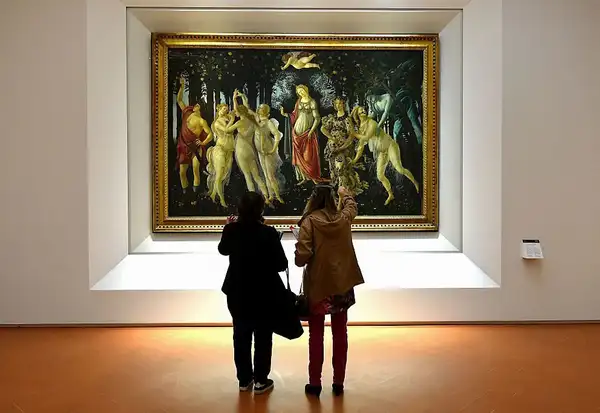
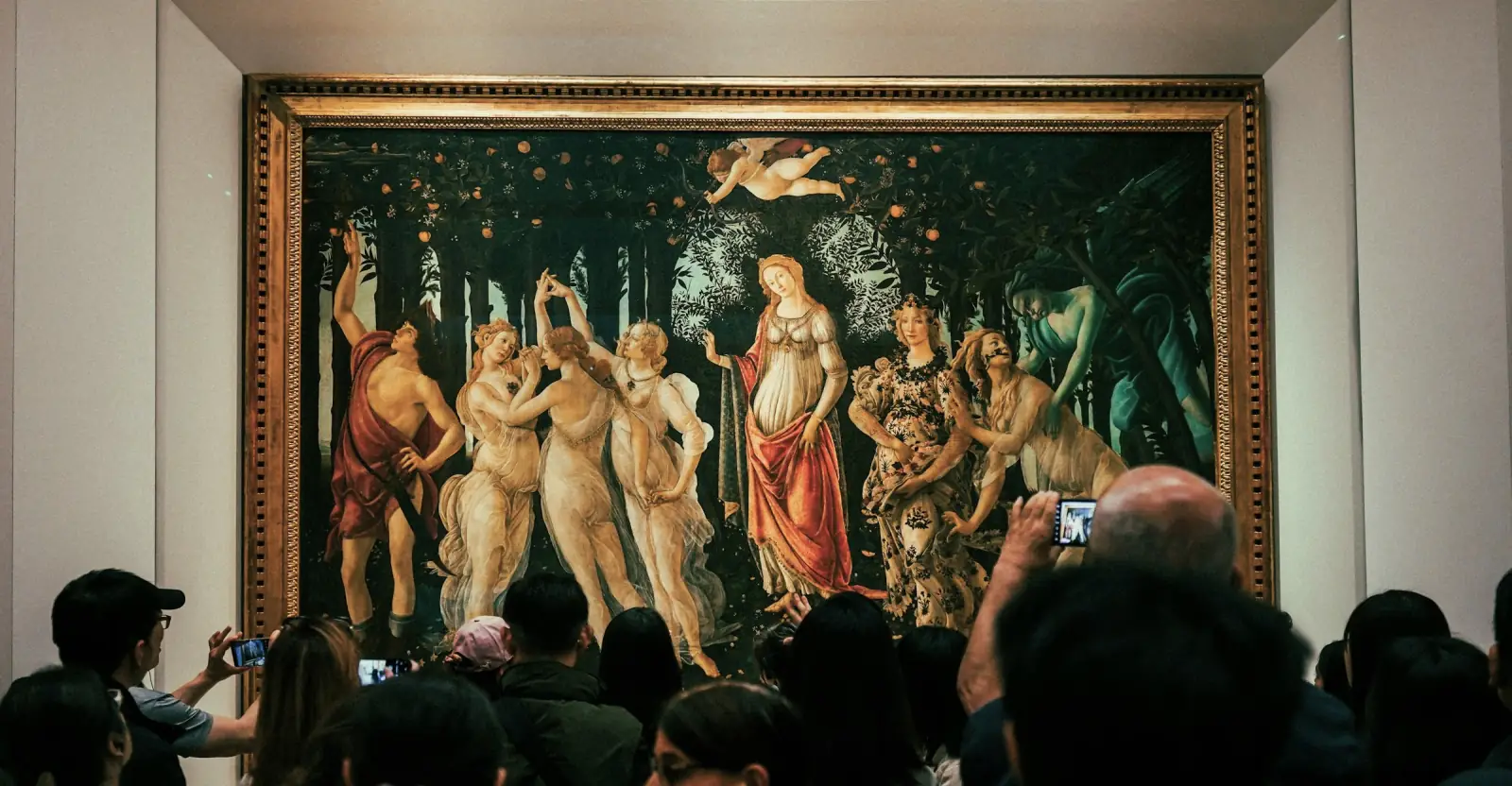
Primavera, slightly earlier, is even more complex: a mythological allegory of spring involving Venus, the Three Graces, Mercury, Flora, Zephyr, and Chloris, arranged in a darkened orange grove. Art historians have been debating its precise meaning for two hundred years. Standing in front of it, you do not need to resolve the debate to feel that something extraordinary is happening.
Leonardo da Vinci
Room 35 contains Leonardo’s Annunciation (c.1472–1475), one of his earliest surviving works, painted when he was still a teenager in Verrocchio’s workshop. The extraordinary delicacy of the angel’s wings — Leonardo studied bird anatomy obsessively — and the soft sfumato haze over the distant mountains already announce a talent unlike anything Florence had seen before.
The same room holds his Adoration of the Magi (1481), deliberately unfinished, which lets you see Leonardo’s working method: the chalk underdrawing, the experimental technique, the restless intelligence that could never quite settle on a final form.
Raphael and Michelangelo
Michelangelo’s Doni Tondo (c.1506–1508) occupies a room of its own. It is the only panel painting he is known to have completed, and it shows in the muscularity of the figures: Mary twists her body in a way that no painter before had attempted, passing the Christ child from Joseph’s hands. The original carved frame, also by Michelangelo, survives intact — an extraordinary rarity.
Raphael’s portrait of Pope Leo X with Two Cardinals (c.1517–1519) is nearby: psychologically acute, technically brilliant, and painted with a realism that made contemporaries feel they could almost touch the velvet and silk.
Caravaggio and the Seventeenth Century
As you move through the later rooms, the lighting darkens and the mood shifts entirely. Caravaggio’s Medusa (c.1597) — the severed head of the Gorgon painted on a ceremonial shield, her mouth open in a final scream — is one of the most viscerally unsettling objects in the museum. His Sacrifice of Isaac nearby is barely less disturbing.
The later rooms also contain superb works by Titian, Tintoretto, Rubens, Rembrandt, and Canaletto, so the Uffizi is not solely a Renaissance gallery — it is a survey of five centuries of European art.
How Long Do You Need at the Uffizi?
Minimum: 2 hours. This gets you through the highlights — Botticelli, Leonardo, Michelangelo — at a brisk pace.
Recommended: 3 hours. This allows you to spend proper time in the Botticelli rooms, follow the collection roughly in chronological order, and pause for a coffee on the terrace overlooking the Arno and the Ponte Vecchio.
If you love art: half a day. The Uffizi rewards slow looking. Visitors who try to see every room in two hours often describe feeling overwhelmed; those who focus on twenty rooms and look carefully at each work come away genuinely moved.
One practical note: there is a café on the second floor with a terrace that has one of the best views in Florence. Build in time for it.
Tickets vs Guided Tours: Which Is Better?
Booking a Ticket Yourself
You can book timed-entry tickets online through the official Uffizi website (uffizi.it). Standard adult admission is currently around €20–25, plus a booking fee. In high season (April through October) the gallery sells out days or weeks in advance, so do not arrive hoping to buy at the door.
The upside: flexibility. A timed entry lets you move at your own pace.
The downside: without context, the Uffizi can feel bewildering. The rooms are numbered, but the logic of how the collection is organised — and why certain works are placed where they are — is not always obvious. Many visitors spend time in front of minor works while walking past masterpieces without realising it.
Joining a Guided Tour
A guided tour solves the context problem. A good guide at the Uffizi does not just tell you who painted what; they explain the commission, the patron, the theological or mythological programme behind the image, and why it mattered to the people who first stood in front of it.
Our Uffizi private tour is designed for visitors who want to go deep rather than wide: a licensed art historian leads you through the collection’s highlights with time for questions, discussion, and genuine looking rather than queue management. Private means exactly that — just your party, no strangers.
If you want to combine the Uffizi with the Accademia in a single morning, the Accademia and Uffizi small-group tour takes care of both reservations and covers both collections with the same guide, which helps you understand how the artists relate to each other.
Best Time to Visit the Uffizi
Early morning (opening, 8:15 am) or late afternoon (after 4 pm). The mid-morning rush — roughly 10 am to 1 pm — is the most crowded period, and the Botticelli rooms in particular can feel uncomfortably packed. The light changes in the late afternoon and the crowds thin considerably.
Avoid Tuesdays and weekends if you have flexibility: these tend to be the busiest days. Midweek mornings in October, November, or February offer some of the most relaxed conditions.
On the first Sunday of the month admission is free for everyone that day, which draws huge crowds — expect long lines, packed galleries, and a much less enjoyable visit. Timed-entry tickets also aren’t available on those Sundays, so there’s no way to pre-book or guarantee a smoother experience. You’re much better off visiting on any other day.
Do You Need to Book in Advance?
Yes. A pre-booked timed-entry ticket secures admission for your chosen date and time, so you do not need to buy tickets on the day. During peak season, the walk-up queue for same-day tickets can exceed two hours — if tickets are even available at all.
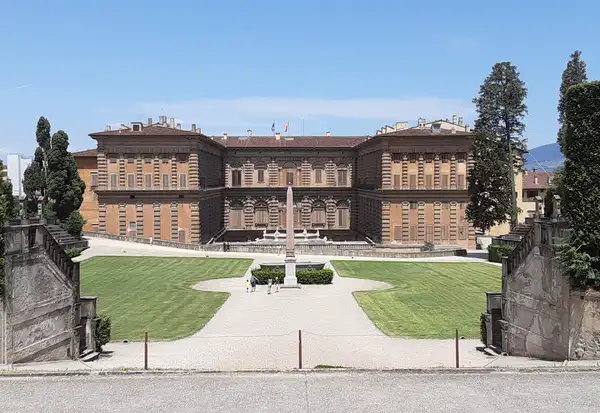
Our Uffizi, Pitti Palace and Boboli Gardens tour combines reserved Uffizi entry with an afternoon across the river at the Pitti Palace and the extraordinary Boboli Gardens, giving you a full day of Renaissance culture on both banks of the Arno. It is particularly good value in summer when the Boboli Gardens are at their best.
Is There Anything Better to Do Instead?
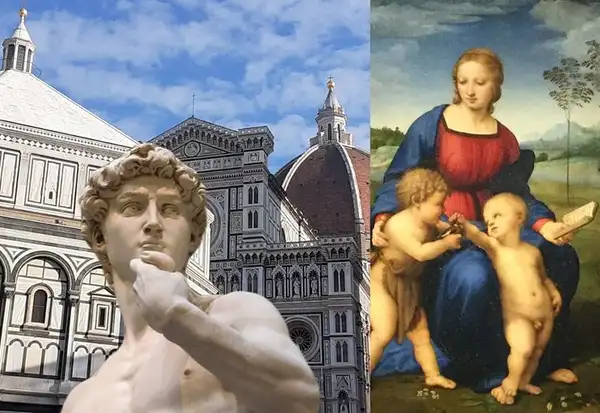
The Accademia is smaller, less tiring, and contains Michelangelo’s David — which many visitors find more moving than anything in the Uffizi. If you genuinely only have time for one museum and you are not already a dedicated art lover, the Accademia may be the better choice for a first visit.
That said, the two museums are complementary rather than competing. The Accademia is about sculpture; the Uffizi is about painting. The ideal Florence trip includes both, which is exactly why so many visitors book our combined tour.
Our Verdict
The Uffizi Gallery is worth it — but only if you give it enough time and enough context. A rushed, uninformed visit to one of the world’s greatest museums can feel like a chore. A properly prepared visit to the same collection — with a good guide, at a calm hour, with enough time to actually look — can be one of the genuinely transformative experiences that travel sometimes offers.
Florence is full of extraordinary things to see. The Uffizi is the best of them.
Browse all of our Florence gallery and museum tours to find the right option for your visit, or explore our small-group and private tour options if you would like a more personal experience. We would love to show you around.